Interesting Facts About How Drones Actually Fly
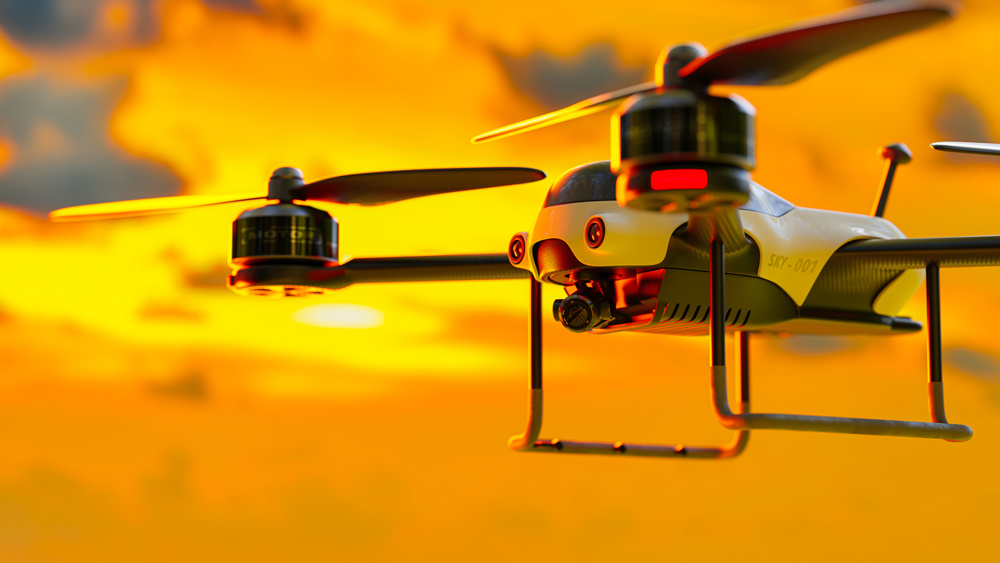
Drones might look simple from the outside—small machines hovering effortlessly in the air—but what keeps them stable is a complex system of physics, engineering, and real-time computation. Whether you're watching a cinematic aerial shot in a film or a smooth travel reel on social media, the same core mechanics are at work behind the scenes.
At the most basic level, drones rely on lift, thrust, and balance. But the real magic happens in the background: flight controllers constantly adjusting, sensors feeding data, and motors responding instantly to keep everything stable. Once you understand how these systems work together, drone flight stops feeling like magic—and starts to look like one of the most precise engineering feats in modern technology.
Fixed-Wing vs. Rotary Drones: Two Very Different Machines
When most people think of drones, they picture quadcopters—the kind used for photography, filmmaking, or content creation. But not all drones are built the same. Fixed-wing and rotary drones operate on entirely different principles, and each serves a distinct purpose.
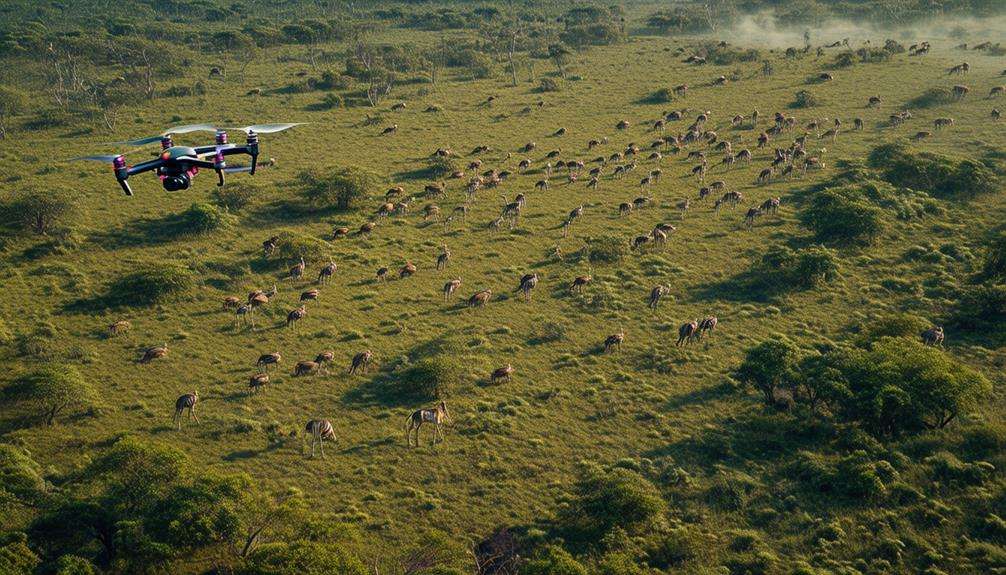
Fixed-wing drones resemble miniature airplanes. They generate lift by moving forward, using their wings to stay airborne efficiently over long distances. Because of this, they’re ideal for large-scale tasks like mapping, surveying, and agricultural monitoring. They can carry heavier payloads and stay in the air longer, but they require space to take off and land.
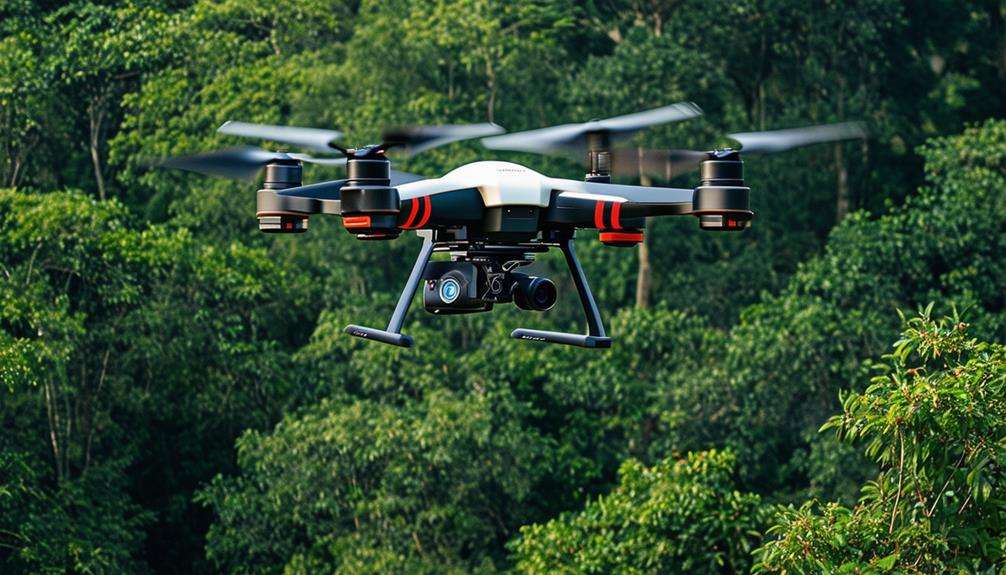
Rotary drones, on the other hand, rely on vertically spinning propellers to stay airborne. This allows them to hover in place, move in tight spaces, and change direction instantly. That precision is why they dominate filmmaking, inspections, and urban operations. However, they sacrifice endurance and payload capacity for maneuverability.
In simple terms, fixed-wing drones prioritize range and efficiency, while rotary drones prioritize control and flexibility. The choice between them isn’t about which is better—it’s about which is better suited to the task.
How Drones Actually Generate Lift to Leave the Ground
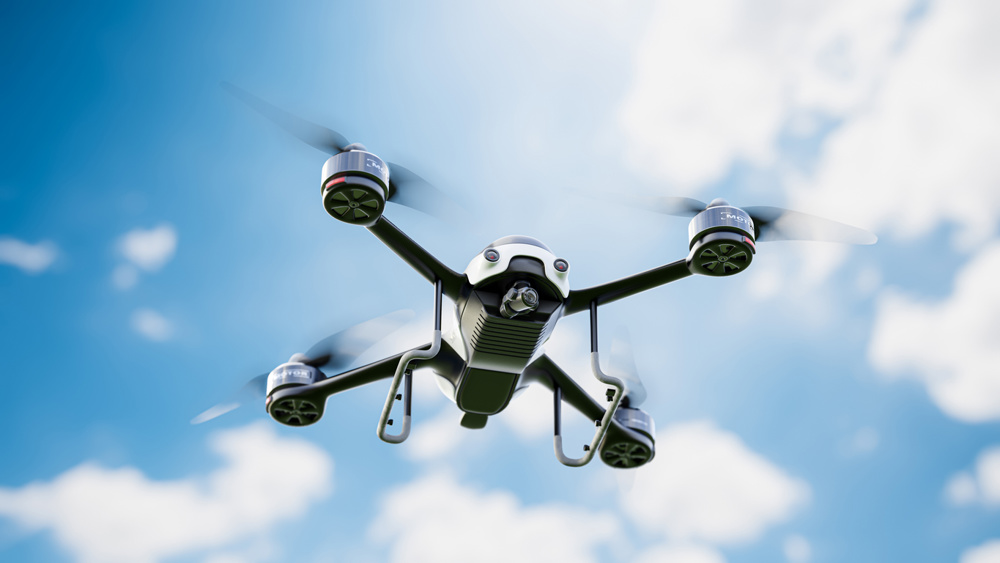
Getting a drone off the ground comes down to a simple principle: lift must exceed gravity. Your drone's propellers aren't just spinning blades — they're carefully engineered airfoils. Blade aerodynamics do the heavy lifting here. Each blade has a curved top surface and a flatter bottom, creating a pressure difference as air moves across them.
Airflow visualization helps explain it: air speeds up over the curved top, generating lower pressure, while slower air beneath creates higher pressure. That difference pushes the drone upward. When you throttle up, all four motors accelerate simultaneously, displacing large volumes of air downward. Newton's Third Law kicks in — the air pushed down drives the drone up.
Once total lift surpasses the drone's weight, you're airborne. The relationship between thrust and altitude can be modeled using uniformly accelerated motion principles, helping engineers predict how quickly a drone climbs under constant force. The amount of lift a drone can generate is directly influenced by rotational speed and blade pitch, meaning faster spinning rotors or steeper blade angles move more air mass and produce greater upward force.
Crack open more surprising stories from the world of drones and filming!
What Propellers Do Once the Drone Leaves the Ground
After takeoff, propellers take on a much more complex role. They’re no longer just generating lift—they’re controlling the drone’s entire movement. Each propeller can change speed independently. By increasing or decreasing speed in specific combinations, the drone can tilt, turn, and adjust altitude. For example:
- Speeding up rear propellers tilts the drone forward
- Speeding up one side creates sideways motion
- Adjusting all propellers equally controls vertical movement
This constant adjustment is called thrust modulation, and it happens continuously throughout flight. To prevent the drone from spinning uncontrollably, opposite propellers rotate in different directions. This cancels out torque, keeping the drone stable while still allowing controlled rotation when needed. What looks like smooth, effortless motion is actually the result of thousands of tiny adjustments happening every second.
How Flight Controllers Make 400 Decisions Per Second
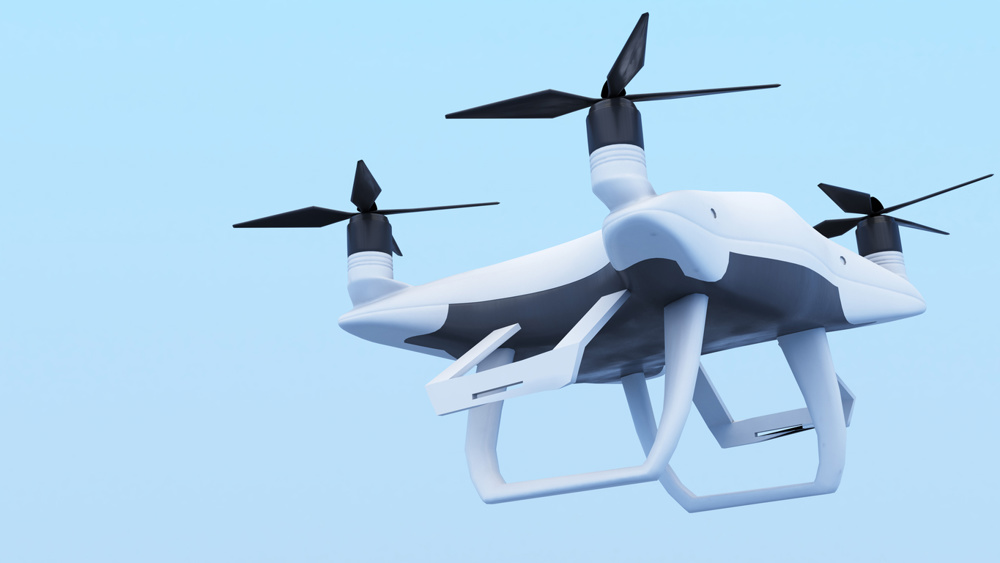
Behind all that real-time propeller adjustment is a tiny computer working at a pace your brain can't match. At the core of every drone is a flight controller—a compact but powerful system that continuously processes data and translates it into precise motor commands. Without it, stable flight wouldn’t be possible.
Your drone's flight controller runs on processors like the ARM Cortex-M4 or M7, typically clocking between 100 and 200 MHz. While that might not sound impressive compared to modern smartphones, it’s more than enough for one critical task: making rapid, continuous decisions about the drone’s position and movement. Instead of handling complex apps or graphics, it’s fully dedicated to flight stability, which demands speed and consistency above all else.
To achieve this, the controller uses control systems known as PID loops—short for proportional, integral, and derivative. Each axis of movement—roll (side tilt), pitch (forward/back tilt), and yaw (rotation)—is managed independently through its own loop. The proportional component reacts to current error (how far off the drone is from its intended position), the integral component corrects accumulated drift over time, and the derivative component predicts future movement to prevent overshooting. Together, these create a balanced system that doesn’t just react—it anticipates.
The Sensors That Keep Drones Stable Mid-Flight
Flight controllers rely on a network of sensors to understand what’s happening in the air. The most important is the IMU (Inertial Measurement Unit), which combines:
- A gyroscope to detect rotation
- An accelerometer to detect movement
Together, they tell the drone its orientation and motion in real time. Other sensors add more layers of awareness:
- Barometers track altitude using air pressure
- LiDAR or optical sensors detect distance from the ground or objects
- GPS systems provide location and positioning
These systems work together to create a complete picture of the drone’s environment. If one sensor fails, others can compensate, ensuring stability and safety. Without this constant feedback, even a slight disturbance would cause the drone to drift or lose control.
How Drones Move Forward, Backward, and Sideways
Keeping your drone perfectly still is one thing—moving it with precision is another. Every directional shift relies on tilt dynamics and thrust vectoring—adjusting propeller speeds to tilt the drone and redirect lift.
To move forward, rear propellers (3 and 4) spin faster, lifting the drone's tail and tilting the nose down. That tilt pushes the drone forward. To go backward, front propellers (1 and 2) speed up instead, reversing the tilt. Sideways movement works the same way. Rolling left means right-side propellers (2 and 4) spin faster, tilting the drone leftward. Rolling right, left-side propellers (1 and 3) take over.
In every case, opposite propellers rotate in opposing directions, canceling torque while the thrust angle drives you exactly where you want to go. Diagonally opposing propellers spin in the same direction specifically to counteract the natural rotational torque that would otherwise send the drone into an uncontrolled spin.
Why Drone Flight Feels Effortless (But Isn’t)
From the outside, drone flight looks smooth and intuitive. The movements are fluid, the hovering appears effortless, and the transitions feel natural. But this simplicity is an illusion.
In reality, drones are constantly making micro-adjustments to maintain stability. Wind gusts, temperature shifts, and even subtle changes in weight distribution can disrupt balance. The system compensates for all of this automatically, adjusting motor speeds in real time to correct even the smallest deviations. These corrections happen so quickly that they’re invisible, creating the impression of perfectly stable flight.
What makes this even more impressive is how continuous the process is. A drone isn’t stable on its own—it’s being stabilized every second. The flight controller, sensors, and motors are working together in a constant feedback loop, detecting changes and responding instantly. Without this system, the drone would drift, tilt, or lose control almost immediately.
How Drone Technology Became Part of Everyday Media
From blockbuster films to travel vlogs and short-form videos, aerial footage is now everywhere. What once required helicopters, large crews, and significant budgets can now be captured with a compact drone operated by a single person. This shift has made cinematic visuals more accessible, allowing creators at every level to produce content that looks polished and immersive.
As a result, the visual language of media has changed. Aerial shots are no longer reserved for dramatic moments—they’re used routinely to establish location, create transitions, and add movement to otherwise static scenes. Smooth tracking shots, overhead perspectives, and sweeping reveals have become familiar formats that audiences instantly recognize.
Social media has accelerated this shift even further. Platforms like TikTok, Instagram, and YouTube have normalized drone footage as part of everyday storytelling. Travel clips, lifestyle content, and even personal moments are now framed from above, blending professional techniques with casual content creation.
Why Understanding Drone Flight Changes How You See Them
Once you understand how drones work, the way you see them changes. A simple hovering shot becomes a display of constant micro-adjustments, with motors responding instantly to maintain balance. A smooth tracking sequence reflects precise coordination between tilt, thrust, and direction. Even a basic takeoff reveals the interaction between lift, gravity, and airflow working in real time.
This awareness adds depth to something that might otherwise seem ordinary. What once looked effortless begins to feel deliberate. You start to notice the control behind the movement—the way the drone holds position, transitions between angles, or adapts to environmental conditions.
Over time, this shift in perspective changes how you engage with drone footage as well. Instead of passively watching, you begin to recognize the mechanics behind each shot. A sweeping aerial reveal becomes more than just a visual—it becomes a demonstration of timing, control, and technical precision.
Conclusion
Drone flight combines physics, engineering, and real-time computation into a single, seamless system. From lift generation to sensor feedback and flight control, every component plays a role in keeping the drone stable and responsive. What makes drones remarkable isn’t just that they can fly. It’s how precisely they do it.
Every movement, every adjustment, and every stable hover is the result of coordinated systems working together at incredible speed. And as drones continue to shape filmmaking, social media, and everyday technology, understanding how they work adds a new layer of appreciation to something you see all the time—but rarely think about in detail.